
It’s Just Making Everything Heavier.
Guilt has a way of sneaking into care partnerships and making everything feel heavier than it already is.
And honestly? It doesn’t deserve the power we give it.
As I was writing this, the song War by Edwin Starr popped into my head. Suddenly, my brain rewrote it:
🎵 Guilt! HUH! What is it good for? Absolutely nothing! 🎵 Worry! HUH! 🎵 Fear! HUH!
While the tune may be playful, the message is serious.
Because guilt shows up constantly in care partnerships — and it does real damage.
Guilt Is Loud. And It Lies.
In caregiving spaces, guilt often sounds like this:
“This disease is relentless. I hate it.”
“I found it extremely difficult to rest due to worrying.”
“Here I sit watching her sleep, feeling guilty, feeling helpless.”
These thoughts don’t appear out of nowhere. Instead, they surface when care partners are overwhelmed, exhausted, and unsure what to do next.
For example, one woman shared that her mom slid onto the floor. She couldn’t get her up — and she didn’t know what to do.
In that moment, she did what many people do. She reached out to a Facebook group and received helpful answers.
However, those answers came after the crisis had already happened.
The Real Problem Wasn’t Guilt
Although guilt felt overwhelming, it wasn’t actually the root issue.
The real problem was a lack of preparation.
Imagine how different that moment could have been if she had known what to do before her mom slid onto the floor.
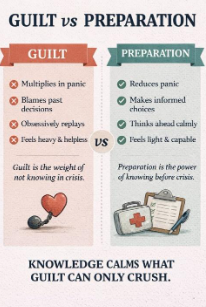
With preparation comes confidence. With confidence comes calm. And with calm comes relief.
Instead of helping, guilt drained her energy. Rather than making her a better daughter, it left her exhausted.
Why Guilt Shows Up So Strongly in Caregiving
Guilt thrives in caregiving for a few key reasons.
First, care partners care deeply.
Second, they want to do the right thing.
Third, they replay decisions long after the moment has passed.
However, guilt doesn’t prevent emergencies. It doesn’t improve outcomes. And it doesn’t make you more loving. What it does do is cloud judgment and increase emotional fatigue.
What Actually Helps Instead
If guilt isn’t the answer, then what is?
Preparation
Preparation gives care partners a plan before panic sets in.
Clear Guidance
Knowing what steps to take removes guesswork in stressful moments.
This Visit Prep Kit can provide clarity.
Understanding What’s Normal — and What’s Not
When expectations are realistic, fear loses its grip.
Knowledge doesn’t erase emotion. However, it does reduce panic.
And panic is where guilt thrives.
What You Can Try Right Now
If guilt is weighing on you, start here:
- Replace “I should have known” with “What can I learn now?”
- Build skills before emergencies happen
- Use resources that empower instead of shame
- Let go of guilt that serves no purpose
Over time, these small shifts create real relief.
When Feeling Helpless Isn’t a Failure
I’ve compiled practical strategies for helping someone off the floor safely — so you’re not trying to figure it out in the moment when adrenaline is high and emotions are heavy.
Feeling helpless isn’t a personal failure. More often than not, it’s a knowledge gap.
And that’s something we can fix.
Want More Support Like This?
I share practical tools, honest conversations, and preparation strategies through my newsletter and the Save Our Sanity Society — created for care partners who want clarity instead of constant self‑doubt.
You’re doing the best you can with what you know.
Now let’s make sure you know more — without the guilt.
Your partner in care,
Shelley