
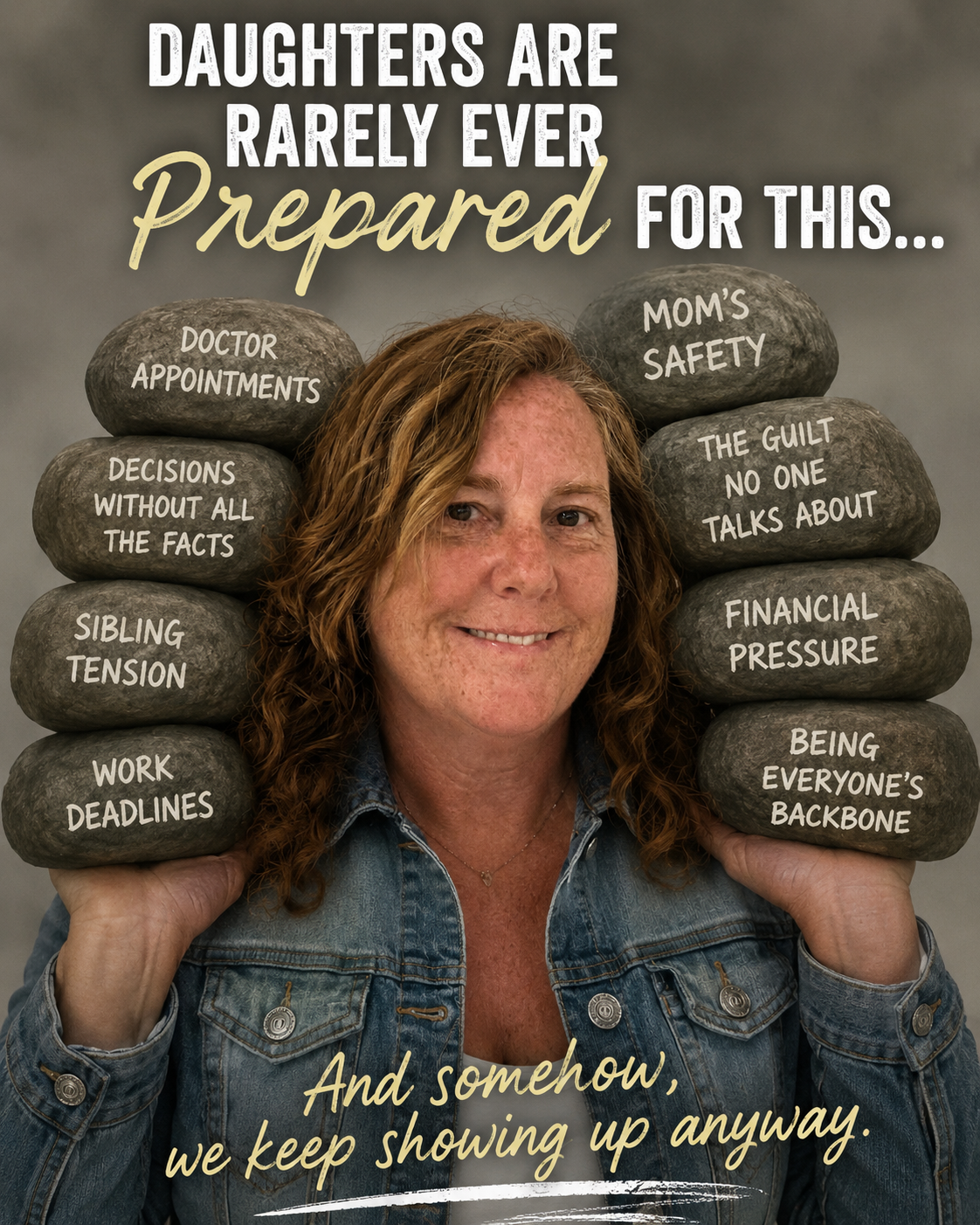
Daughters caring for aging parents are rarely ever prepared for this.
Not really.
They prepare for the paperwork. The travel. The logistics. The medication lists. The packing. The phone calls.
But they are rarely prepared for the emotional weight of becoming the nervous system for an entire family.
It Was Never Just About the Move
A little while back, I stopped into one of our resident rooms while a daughter was getting things ready for her father’s arrival.
The room wasn’t fully set up yet. The bed still hadn’t been delivered. She was sitting in the recliner, leaning forward, organizing, working, trying to make the room feel right before he arrived.
I greeted her and she greeted me back. Before we exchanged another word, I could already see it.
The shaky hands, shallow breathing, and scattered thoughts trying desperately to stay organized.
She still had a mountain in front of her. She had to get her father on a plane, navigate the airport, protect his dignity, protect her mother, prevent escalation, and somehow stay calm enough for everybody else to borrow calm from her.
And underneath all of it was a fear that quietly sat behind almost every sentence she spoke:
“Please don’t let my mother get blamed for this.”
Kind. Gentle. Giving. Selfless. The peacekeeper.
Wanting desperately to still have her husband. Only now, he was here, but not fully here.
Watching her reminded me of something I see over and over again. Families often believe they’ll simply figure it out when the time comes, but that’s rarely what happens.
When Daughters Become the Family’s Nervous System
Families do not rise to the occasion under stress. They fall to the level of what they have practiced. This is especially true for daughters caring for aging parents.
Somewhere along the way, they quietly become the person everyone looks to for answers. The one coordinating appointments, managing medications, protecting relationships, anticipating problems, and trying to hold everyone together at the very moment they’re carrying the most themselves.
It’s a role no one formally assigns. It just slowly becomes theirs.
Brain Change Doesn’t Respond to Pressure
You’re not testing memory. You’re honoring dignity.
What he needed was not correction. He needed safety, connection, steadiness, and familiarity. A nervous system calmer than his own.
As we talked, he looked around the room and quietly asked, “Why isn’t Karen with us?”
This is where many families accidentally make things worse because panic starts talking. We explain, reason, correct, and try to convince them.
But brain change does not respond well to pressure. It responds to emotional tone.
The goal was never to win the conversation. The goal was to protect the relationship.
Meeting someone where they are instead of trying to pull them back to where they used to be.
This Is the Work Nobody Sees
Especially daughters.
These are skills: Communication under stress, de-escalation, emotional regulation, and understanding brain change.
This is the real work because panic spreads quickly through families. But calm can too.
The more we understand what’s happening, the more confidently we can respond instead of react. And that confidence doesn’t just change the experience for the person living with brain change.
It changes the experience for the entire family.
Making the Right Move
One step in the right direction
If you’re trying to make sense of senior living options, difficult family conversations, or wondering what comes next, Making the Right Move guide was created for families just like yours.
The guide is free—you simply cover a small shipping and handling fee, and we’ll send it directly to your home.
Get your Making the Right Move guide Today
Visit Prep Kit
Are you looking at senior living options?
If you’re beginning to explore senior living options for someone you love, you don’t have to walk into those conversations wondering what to ask or what to look for.
Our free Visit Prep Kit was created to help families feel more confident before they ever step through the front door. Inside, you’ll find practical questions, helpful checklists, and guidance to help you evaluate communities with greater clarity.
Because the more prepared you are, the less overwhelming the journey can feel.
Download the Visit Prep Kit Here
Final Thoughts
If there’s one thing I hope daughters take away from this, it’s that feeling overwhelmed doesn’t mean you’re doing something wrong.
It means you’re carrying something incredibly heavy.
No one is born knowing how to navigate brain change, family dynamics, difficult conversations, or the countless decisions that come with caring for an aging parent. These are skills we learn over time, often while we’re living them.
So if you find yourself trying to hold everyone together, remember this:
You don’t have to have all the answers today, you don’t have to carry every decision by yourself, and you don’t have to do this alone.
Sometimes the greatest gift you can give your family isn’t having everything figured out. It’s being willing to ask for support, learn along the way, and remember that calm, confidence, and clarity are things we can build—one step at a time.
Your partner in care,
Shelley