
If you’ve ever wondered how to avoid arguments with someone with dementia, this little interaction with Marla offers an important lesson.
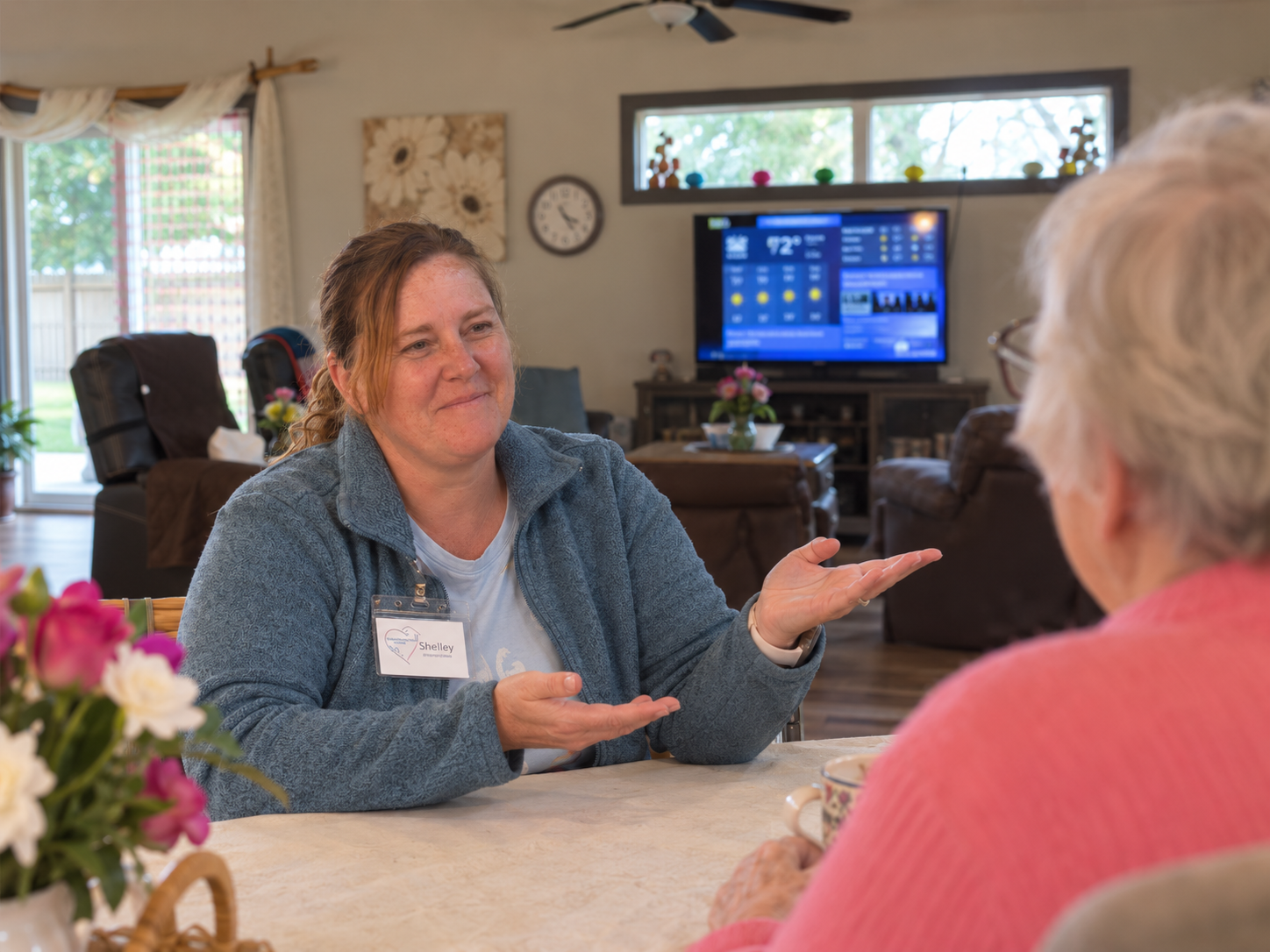
I open the door to the home and immediately know something is off. Marla is sitting in the middle of the room, clearly upset. She looks straight at me and says,
“I am hungry. I did not have lunch. They tell me that I had lunch, but I know I didn’t… because I’m hungry.”
I smile and sit down near her.
“Oh,” I say, “well, if that’s the case, let’s get you something to eat. Are you a little hungry or a lot hungry?”
As I ask, I use my hands like a scale. One hand low. One hand high. Marla studies my hands for a moment.
“Well… a little hungry.”
I glance over at my team member.
“Hi Emily. I’m sure we have something perfect for a little hungry. Let’s check the refrigerator.”
Emily smiles and opens the fridge. She finds two options.
“Marla,” she says, “would you prefer beef and noodles or chicken noodle soup?”
“The beef and noodles looks good,” Marla replies. “I’ll have that.”
And just like that, the tension dissolves. No arguing, no accusing, no raised voices, and no escalation. Just problem-solving.
Why Dementia Can Lead to Misunderstandings
Here’s the important part. Marla had eaten lunch. Emily had kindly reminded her of that just before I arrived. She wasn’t rude or unkind. She simply stated a fact when Marla said she hadn’t eaten.
But Marla was hungry. And her brain was trying to make sense of that feeling.
You see, Marla has never been much of a snacker. Throughout her life, hunger meant one thing: It must be mealtime. So when her body told her she was hungry, her brain reached for an explanation that made sense to her.
“If I’m hungry, then I must not have eaten.”
That wasn’t necessarily stubbornness. It wasn’t an attempt to manipulate anyone. It was Marla trying to understand what she was experiencing with a brain that no longer processes and remembers information the way it once did. And here’s where things get interesting.
How to Avoid Arguments With Someone With Dementia: A Quick Brain Lesson
Our brains are constantly working to make sense of the world around us. They use memories, habits, past experiences, and incoming information to help us understand what’s happening. But when someone is living with dementia or other brain changes, those processes don’t always work the way they used to.
Sometimes, the brain fills in missing information with an explanation that feels completely true to the person experiencing it. This can be related to something called confabulation, where a person unintentionally recalls or describes events inaccurately without deliberately trying to deceive anyone.
I like to think of it this way: The brain is doing its best to make sense of the information it has. So when we respond with, “Yes, you DID eat lunch,” we’re introducing a fact that may directly conflict with what that person believes happened. And even when we’re absolutely right, that correction may not bring understanding.
Instead, it can bring confusion, frustration, or distress. Because now we’re no longer talking about hunger. We’re arguing about whose version of reality is correct.
And let me ask you something… When was the last time arguing with someone about what they remember actually made them feel better?
How to Avoid Arguments With Someone With Dementia
Let’s go back to Marla and Emily.
Was it Marla? A woman doing the very best she can with what I call an emerald-state brain, working overtime to make sense of the world around her?
Or was it Emily? A kind, well-intentioned care partner using her sapphire-state brain to correct a fact rather than respond to the need underneath it?
Now, if you’re unfamiliar with those terms, they’re part of the language I use to help explain different brain states and how they affect our interactions.
The important thing to understand is that Marla and Emily weren’t approaching that conversation with the same abilities to process, remember, and interpret information. And that’s where the disconnect happened.
Emily wasn’t wrong. But correcting Marla wasn’t helping. And that’s one of the biggest lessons in learning how to avoid arguments with someone with dementia: sometimes, meeting the need matters far more than proving a point.
Marla’s hunger was real. Her frustration was real. Her need to feel heard was real. And when we responded to that need instead of debating whether she’d eaten lunch, everything changed.
We didn’t need to convince Marla that she was mistaken. We simply needed to help her feel better.
A small serving of beef and noodles accomplished what another five minutes of explaining probably wouldn’t have.
You Spend So Much Time Caring for Everyone Else. Let’s Make Things a Little Easier for You.
November is National Family Caregivers Month, and I can’t think of a better time to remind you that while you’re busy looking out for everyone else, you deserve a little support, too.
Whether you’re trying to understand your parent’s changing needs, make difficult care decisions, or simply figure out what to do next, it can feel like there’s a million things to think about and no clear place to start.
That’s why I’m featuring my Ultimate Family Care Clarity Pack & Companion Workbook this month.
It’s designed to help you:
- Get your thoughts organized when everything feels overwhelming.
- Ask the right questions before making important care decisions.
- Prepare for family conversations that aren’t always easy.
- Feel more confident about your next steps instead of constantly second-guessing yourself.
Because you shouldn’t have to figure everything out through trial and error.
Available in digital, printed, or both formats, so you can choose what works best for you.
This National Family Caregivers Month, give yourself something every care partner deserves: a little more clarity and a lot less overwhelm.
EXPLORE THE WORKBOOK & GET YOUR COPY
Dementia Communication Tips: Respond to the Need, Not Just the Words
The next time someone living with dementia tells you something you know isn’t factually accurate, I want you to try something different. Learning how to avoid arguments with someone with dementia often starts with recognizing that the need behind their words matters more than correcting the facts.
Instead of immediately asking yourself: “Is what they’re saying true?”
Try asking: “What is the need underneath what they’re telling me?”
It could be that they’re hungry, they’re tired, or they’re frightened, uncomfortable, lonely, or looking for reassurance. Maybe they’re simply trying to make sense of something that feels confusing.
Of course, we still need to pay attention to genuine safety concerns, medical needs, and changes in someone’s condition. But not every mistaken statement needs to become a debate.
Sometimes, the most helpful response isn’t another explanation. It’s a little curiosity, a little flexibility, and a willingness to meet someone where they are. Because when we stop focusing on being right and start focusing on what someone needs, we often discover that the argument never needed to happen in the first place.
And that, my friends, is how we save a little sanity for everyone involved. Understanding how to avoid arguments with someone with dementia doesn’t mean every interaction will be easy. But sometimes, a small shift in how we respond can make all the difference.
Want Fewer Arguments and More Calm Moments Like This?
Sometimes, the smallest shift in how we respond can make the biggest difference.
That’s why I created the Save Our Sanity Society monthly newsletter — a place where I share real-life stories, practical tips, and helpful insights to make navigating aging parent care a little less overwhelming.
Through the newsletters, you’ll learn how to:
- Decode behaviors before they escalate so you can better understand what your loved one is really trying to communicate.
- Communicate without confrontation and turn frustrating interactions into calmer, more meaningful moments.
- Support dignity while reducing stress for both your loved one and everyone involved in their care.
Because caring for someone you love doesn’t come with an instruction manual. And sometimes, a little understanding can save everyone a whole lot of frustration.
Subscribe to the Save Our Sanity Society newsletter for practical guidance, real stories, and encouragement built for real life — not textbook caregiving.
Want it delivered to your inbox?
GET THE FREE DIGITAL NEWSLETTER
Prefer a printed copy you can read, save, or share?
SEND ME THE FREE PRINTED NEWSLETTER
Both versions are free. Just choose the one that works best for you.
Your partner in care,
Shelley