

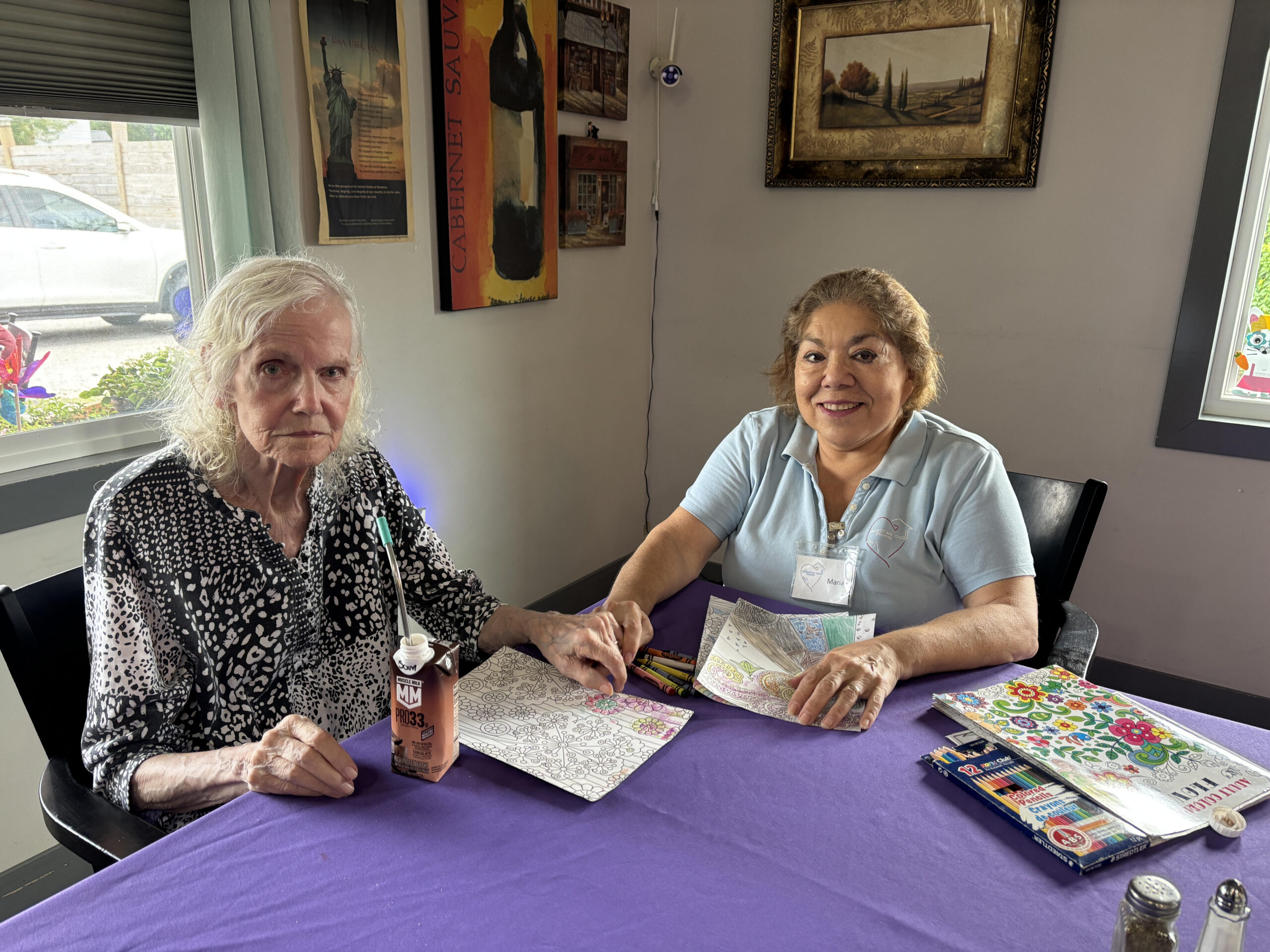
Guilt after moving a parent to assisted living is something I hear about all the time. Even when you know Mom is safer and getting the support she needs, that nagging feeling can be hard to shake.
A daughter sat across from me recently and said something I’ve heard hundreds of times.
“I know Mom is safer now. She’s getting better care than I can provide, and I couldn’t keep doing this.”
As she looked down at the table, she whispered: “But I still feel guilty.”
I reached for a Kleenex and told her something I wish every daughter could believe.
“Guilt has no place here.”
No matter how hard you try, guilt doesn’t magically disappear when the crisis is over. Sometimes it shows up when you’re driving home after moving Mom into assisted living, or after you sleep through the night for the first time in months, or when you suddenly realize you haven’t spent the entire day worrying about whether she took her medication.
Then, strangely enough, guilt shows up because things are actually getting better. And that is where I think we need to have a conversation.
Guilt Is That Uninvited Relative Who Refuses to Leave
I think guilt gets way too much airtime. Seriously.
It’s like that one relative who wasn’t invited to Thanksgiving but somehow shows up anyway, eats all the mashed potatoes, doesn’t bring a dish to pass, criticizes everybody’s cooking, and then refuses to leave.
That’s guilt.
You move Mom somewhere safe. Guilt screams at you. Mom starts eating better. Guilt spits the food right back in your face. You finally sleep through the night for the first time in six months. And there it is, waiting for you the moment you wake up.
Now listen, I’m not saying you won’t feel guilty. You probably will. Many daughters do.
But here’s something I want you to understand: Feeling guilty and being guilty are two completely different things.
One is an emotion. The other is a fact. And those two things get confused all the time.
Why You Feel Guilt After Moving a Parent to Assisted Living
I often tell people that guilt is an ANT: Automatic Negative Thought.
It’s a concept from Dr. Daniel Amen, whom I admire and respect. These thoughts sneak into your head and start making accusations.
“You should have done more.”
“You gave up.”
“A good daughter would have kept her mother at home.”
“Mom would never have done this to you.”
And if you hear those thoughts often enough, you may start treating them like facts. But most of the time, they’re not facts. They’re emotions wearing disguises. Guilt after moving a parent to assisted living has a way of making you question decisions you made out of love, even when you know those decisions were necessary.
So let’s talk about reality for a minute. Reality says Mom is safe. Someone is there when she needs help. Meals are being prepared and served on a schedule so she doesn’t have to remember to make herself something to eat. Medications are being managed. Someone besides you is paying attention when something changes.
And perhaps most importantly? Reality says you were never supposed to be an entire care team by yourself.
You Were Never Meant to Do the Work of an Entire Care Team
Somewhere along the way, we’ve convinced ourselves that being a good daughter means being able to do everything. Manage medications. Coordinate appointments. Prevent falls. Handle memory loss. Pay bills. Cook meals. Keep everybody happy. And somehow still have a marriage, a career, children, friendships, hobbies, and maybe sleep occasionally.
That’s ridiculous.
One person was never meant to do the work of an entire care team. Yet so many daughters carry the expectation that if they just worked a little harder, organized a little better, or sacrificed a little more, they could somehow make it all work.
And when they finally ask for help? Guilt moves right in. But needing help isn’t evidence that you failed. It’s evidence that the responsibilities became bigger than one person could reasonably manage.
There’s a difference. And it’s an important one.
The Right Care Decision Starts With the Right Questions.
When it comes to Mom’s care, it’s easy to wonder if you’re making the right choice. But you don’t have to figure everything out through trial and error.
Our Making the Right Move Guide helps you understand what to look for, what questions to ask, and what to consider before making one of the biggest decisions for your aging parent.
Because the goal isn’t to make a perfect decision. It’s to make an informed one you can feel confident about.
Get Your FREE Making the Right Move Guide
(Just pay a small fee for shipping & handling)
How Relationships Can Improve After Moving a Parent to Assisted Living
One of the biggest surprises I hear from families is that after Mom moves into assisted living, they actually visit more. That sounds backwards, doesn’t it? But think about what visits looked like before.
There were medications to organize. Laundry to do. Bills to sort through. Appointments to schedule. Problems to solve. Every visit had a checklist. And somewhere in the middle of getting everything done, the opportunity to simply enjoy each other disappeared.
Now? You can sit. Talk. Laugh. Look through old photos. Reminisce.
And I want to spend a moment on that last one, because reminiscing can be magical. There’s something special about sharing a memory and reminding each other of the people you’ve been, the experiences you’ve had, and the life you’ve built together.
Sometimes one memory sparks another, sometimes it leads to laughter, sometimes it inspires a new activity or adventure, and sometimes it’s simply a beautiful moment of connection.
The kind of moment that gets lost when every visit is consumed by responsibilities. You can enjoy a meal together instead of spending the entire visit preparing it. You can be present instead of constantly thinking about what needs to get done next.
Sometimes the relationship gets better because the job gets smaller. And that isn’t something to feel guilty about It’s something worth celebrating. Guilt after moving a parent to assisted living can make it difficult to enjoy these moments. But having more time to simply be together isn’t something you need to apologize for.
Getting Help Doesn’t Mean Mom’s World Gets Smaller
Then something else can happen. Mom starts socializing. She joins an activity, she makes a new friend, and she laughs with somebody besides you.
Her world becomes bigger than the same four walls she’s been staring at every day. Of course, every person’s adjustment is different. Moving into assisted living doesn’t mean every problem disappears overnight. But when the environment and support are the right fit, there can be new opportunities for connection, routine, and enjoyment.
And you know what? That’s not abandonment. That’s expansion.
You haven’t removed yourself from her life. You’ve helped build a bigger circle of support around her. There’s a tremendous difference.
How to Let Go of Guilt After Moving Mom Into Assisted Living
If guilt after moving a parent to assisted living keeps showing up, it’s time to stop letting that feeling decide whether you made the right choice.
In fact, I think we need a new ritual. The next time guilt starts running its mouth, go find that old song, Love Don’t Live Here Anymore. Turn it up. I’m talking embarrass-your-family loud.
Then sing your own version: “Guilt don’t live here anymore…” Because frankly, guilt has become a squatter. It moved into your head years ago and never started paying rent.
It was there when Mom forgot her medications, when you couldn’t get off work, when exhaustion made you snap at your spouse, and when you signed the move-in paperwork. And if you’re not careful, it’ll still be there five years from now, trying to convince you that you failed because you couldn’t personally provide twenty-four-hour care and still show up smiling.
That’s nonsense. Complete nonsense. Guilt is a liar. Not all the time. Sometimes guilt alerts us to something we genuinely need to address. But often enough that I don’t trust it to drive.
So the next time guilt starts making accusations, don’t automatically hand it the steering wheel.
Ask yourself:
- What am I actually feeling guilty about? Is there something I need to address, or am I grieving how things used to be?
- What do I know to be true? Is Mom receiving the support she needs? Am I still showing up for her?
- Would I expect someone I love to do all of this alone? If not, why am I holding myself to that impossible standard?
Sometimes putting those thoughts into words helps you recognize how unfairly you’ve been judging yourself. And sometimes you need to have that conversation more than once.
That’s okay, too.
The Goal Was Never to Be the Entire Care Team
Will guilt still visit? Probably. Guilt after moving a parent to assisted living doesn’t always disappear overnight. But every time it shows up, you have a choice: listen to the accusations or remind yourself why you made the decision in the first place. But every time it shows up, remind yourself of what is actually true.
You didn’t stop loving your mom, you didn’t abandon her, and you didn’t give up.
You found another way to show up by getting help and building a team, you made sure she had support, and you gave yourself the opportunity to stop merely surviving and start living again.
Sometimes the most loving thing we can do is stop trying to do everything ourselves. Making sure someone gets the care they need is not giving up on them.
It’s showing up for them in a different way. And maybe that’s the reminder we all need:
The goal was never to be the entire care team. The goal was always to be her daughter.
Some Days, Even the Next Step Feels Like Too Much.
If you’ve ever felt like you’re supposed to have all the answers when it comes to Mom’s care, you’re not alone.
Between the decisions, responsibilities, and constant second-guessing, it’s easy to mistake feeling overwhelmed for doing something wrong.
But those are two very different things.
In another blog, “Some Mornings Feel Like Fog (And That Doesn’t Mean You’re Doing It Wrong),” Shelley shares why feeling uncertain doesn’t mean you’re incapable—and why you don’t need to have the whole road figured out to keep moving forward.
READ: SOME MORNINGS FEEL LIKE FOG
Less Guilt. Less Guesswork. More Peace of Mind.
Caring for an aging parent comes with questions, second-guessing, and moments when you wonder if you’re doing enough.
That’s why I created the Save Our Sanity Society, a FREE newsletter filled with real-life stories, practical advice, and a little perspective to help you navigate the challenges of aging-parent care without losing yourself in the process.
Because caring for someone you love doesn’t come with an instruction manual. And sometimes, a little understanding can save everyone a whole lot of frustration.
Subscribe to the Save Our Sanity Society newsletter for practical guidance, real stories, and encouragement built for real life — not textbook caregiving.
Want it delivered to your inbox?
GET THE FREE DIGITAL NEWSLETTER
Prefer a printed copy you can read, save, or share?
SEND ME THE FREE PRINTED NEWSLETTER
Both versions are free. Just choose the one that works best for you.
Your partner in care,
Shelley