
There are three gifts I want to talk about today. And yes, I’m calling them gifts on purpose. When we talk about dementia communication, we tend to focus on the words, memories, and abilities that are being lost. But I want to talk about something different: what remains.
Dr. Daniel Amen often reminds us that one of the most important habits for brain health is learning to focus on what is good and what we like, instead of fixating on what is wrong or what we don’t.
During my recent certification with Positive Approach to Care (PAC) and Teepa Snow, I’ve learned just how long the brain can hold onto some of the things that truly connect us.
These trainings didn’t just give me techniques. They reshaped how I understand behavior, distress, and the deep human need to feel safe, seen, and respected throughout the dementia journey.
Because when someone begins losing the ability to process our words, it is very easy to focus on what is disappearing.
What can’t they remember, what can’t they understand, why can’t they follow these directions anymore, and why are they fighting me on something that used to be so simple?
But there is another question I think we need to get much better at asking: What is still there?
What’s Going Wrong Is Usually the Loudest Thing in the Room
The problem is, looking for what remains doesn’t always come naturally.
It takes discipline. Practice. Intention. Because what’s going wrong is usually loud. Obvious. Sometimes it slaps us right in the face.
And sometimes… it literally does.
If you’ve ever been hit, pushed away, or screamed at by someone you were trying to help, then you know how jarring that moment can be. Your own nervous system reacts, too.
Maybe you become frustrated. You might repeat yourself more firmly or try to move faster because there are ten other things that need to be done. Or maybe you believe that what you’re doing simply has to be done.
The shower has to happen. The pants have to be pulled up. The medication has to be taken. The person has to get from here to there. Sometimes those things are necessary.
But here’s the question I want us to learn to ask: Does it have to be done this way?
That tiny question can completely change what happens next.
Dementia Communication Starts With a Pause
This is where Prepared, Not Panicked begins.
Not in a crisis. Not in an emergency. But in the moment you pause and ask yourself, What’s another way?
If someone is crying out, resisting, striking, pushing you away, or showing clear signs of distress while you’re trying to help them, that behavior is giving you information. Understanding dementia communication means learning to pay attention to those signals, even when they aren’t coming through words.
Stop. Pause. Take three deep breaths in through your nose and out through pursed lips.
If the person you’re caring for is safe, give yourself 10 to 15 minutes to get curious instead of reactive.
Why is May crying out? What is she trying to communicate? Has something changed? What am I asking her brain to do right now that it may no longer be able to do?
Her fight-flight-freeze system is clearly activated. Adding more words, more instructions, and more pressure may only give her overwhelmed brain even more information to process.
The goal in that moment isn’t compliance. The goal is regulation.
Once we understand that, we can stop trying to force our way through an ability that is changing and start reaching for abilities that are still available. And this is where those three gifts come in.
Music. Poetry. Prayer.
When My Words Weren’t Reaching May
Let me tell you about May.
May was clearly distressed. She wanted her pants pulled up, and she wanted them pulled up now. The problem was, she couldn’t stand. I could explain what needed to happen. I could tell her what I needed her to do and repeat the directions.
But the instructions weren’t landing.
Her brain couldn’t process them in that moment, so I stopped talking and instead, I started singing.
Now, let me be clear: I am not the person you want singing at your wedding, but I can carry rhythm and I knew something important about May.
Prayer matters deeply to her.
So, I prayed in rhythm. Then, my prayer became gentle instructions set to a tune, and something changed.
Her nervous system began to settle. She stood. With singing cues, we pulled her pants up together. And then May decided it was time to walk, so we walked.
Think about how different that moment could have been.
I could have kept repeating the same instructions louder and louder. I could have become frustrated because she “wasn’t listening.” May could have become more distressed because someone kept asking her to do something her brain couldn’t figure out how to do.
Instead, we found another doorway. That is Prepared, Not Panicked in action.
Not forcing the moment. Not demanding that May’s brain work the way I wanted it to work. But reaching for something her brain could still access.
When Language Changes, Dementia Communication Has to Change Too
This is one of the things I wish more families understood about dementia. When conversational language becomes difficult, it can look as though the person we know is disappearing. But dementia communication is so much bigger than conversation.
A familiar hymn can still mean something, a prayer repeated for decades can still bring comfort, a poem learned in childhood may still have a familiar cadence, a song from someone’s teenage years can suddenly bring a smile to a face that seemed unreachable moments before.
And then there is rhythm.
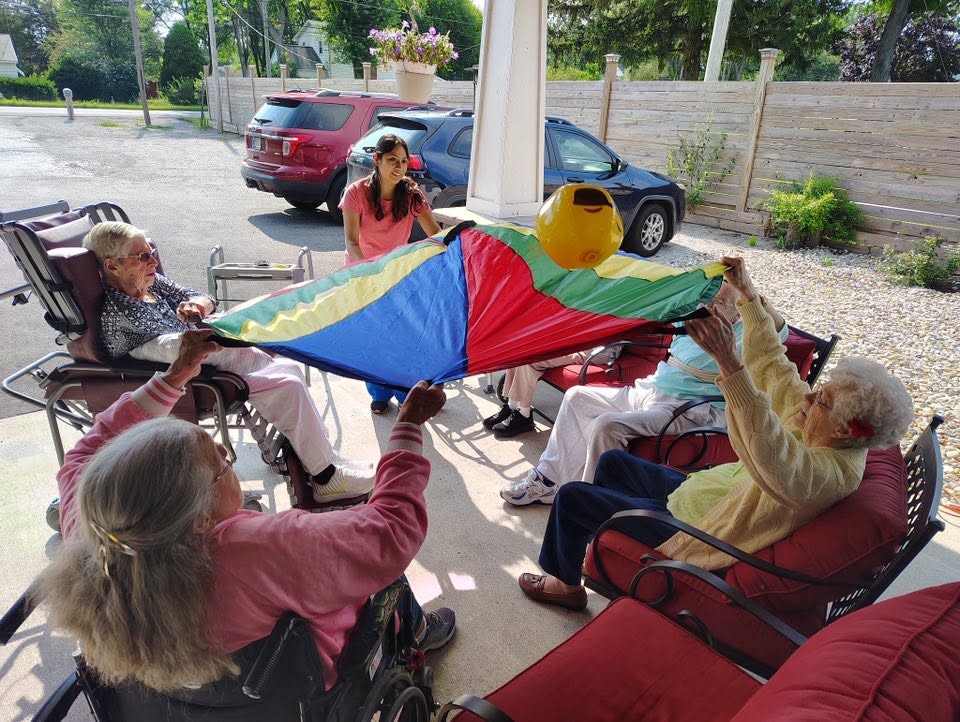
This is why I dance with residents living with dementia. Yes, sometimes we’re dancing simply because dancing is fun, but I also use rhythm with purpose.
I can use rhythm to help someone turn so they can sit. While we’re walking, I can count steps. And when spoken directions aren’t making sense, I can put movement to a beat. Even counting can become a cue.
What looks like play from the outside may actually be helping a person accomplish something their brain was struggling to organize through words alone. This is what dementia communication can look like when we stop relying only on spoken instructions. That is what I mean when I talk about gifts dementia can’t take away.
It doesn’t mean dementia changes nothing. Every person won’t retain the same abilities or respond to the same things. What it does mean is that we have to stop measuring someone only by what they can no longer do. We have to learn to look for what is still available to them.
And when you know to look for those things before you need them, you have more options when a difficult moment comes.
What Would Reach You If Words No Longer Could?
Now I want you to make this personal. Don’t start with your parent. Start with you.
If you were living with dementia and needed help through your day, how would you want it done? What would you want people to understand about dementia communication if your words were becoming harder to access? Would you want things done to you or with you?
If you became frightened or overwhelmed, what would help you feel safe? Think about the songs you loved as a child and the music that mattered during your teenage years.
Was there a song your mother always sang or a hymn you’ve heard hundreds of times? A prayer you’ve repeated since childhood, or a poem you know by heart?
What makes you laugh? Do you like it quiet when you’re upset, or does silence make you uncomfortable? Do you want someone close, or do you need space? What routines make you feel settled? What are the little things that make you feel like yourself?
These may sound like small details. They’re not. They’re pieces of you. We tend to prepare for the obvious things like medication lists, insurance information, doctors, legal documents, and emergency contacts.
Those things matter, but I also want families to know what isn’t sitting in a medical chart.
What comforts Mom and makes Dad laugh? What does she absolutely hate?
Is there a routine that makes him feel like himself? Is there any music that belongs to their story and what faith practices matter?
How do they want someone to approach them when they’re frightened?
That information can become incredibly valuable when someone can no longer explain it themselves. We shouldn’t wait for dementia to start thinking about it. I should be able to tell you these things about myself, too.
That’s part of being prepared.
One Final Thought
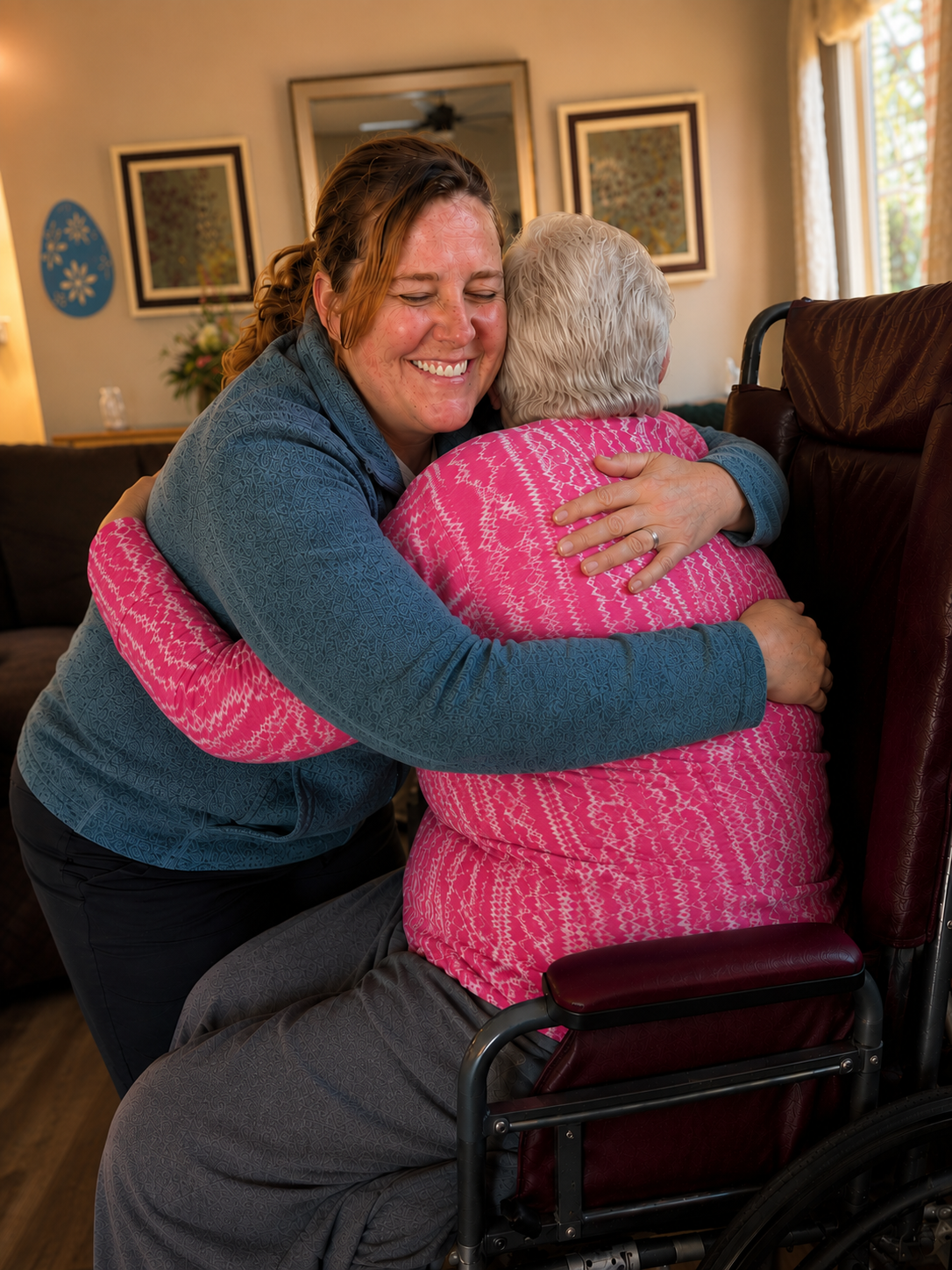
Dementia doesn’t erase who we are. It can make it harder for other people to see us. That’s an important difference.
So instead of only asking what dementia has taken away, I want us to get better at looking for what remains. Sometimes the most meaningful dementia communication happens when we stop expecting words to do all the work.
The music. The rhythm. The prayer. The familiar words. The emotional memories.
The pieces of a person that are still right there, waiting for us to learn how to reach them.
What Changes When Panic Isn’t Running the Moment?
May’s story is one example of what can happen when we pause long enough to respond differently. But sometimes the person who needs that pause isn’t the one receiving care. It’s the daughter, granddaughter, or family care partner trying to figure out what comes next.
In “The Moment Calm Replaced Panic,” I share the story of a granddaughter who walked into HolistiCare overwhelmed, exhausted, and unsure where to even begin—and what changed when she left with something she didn’t have before: a plan.
READ THE MOMENT CALM REPLACED PANIC
Be Prepared Before You Need to Be
You may not know exactly what will change with Mom or when. But you can make sure your family isn’t starting from scratch when it does.
The Complete Grab & Go Aging Parent Care System helps you understand what’s happening with Mom right now, keep the important information in one place, get your family on the same page, and feel more prepared when it’s time to decide what comes next—including whether a care setting is truly right for her.
Throughout September, you can get the complete system for $197 (regularly $297) and receive a special bonus at no additional cost.
Because being prepared isn’t about predicting the crisis. It’s about making sure you have something to reach for when the moment comes.
EXPLORE THE COMPLETE GRAB & GO AGING PARENT CARE SYSTEM
Your partner in care,
Shelley