
(and what that moment reveals about stress and choice)
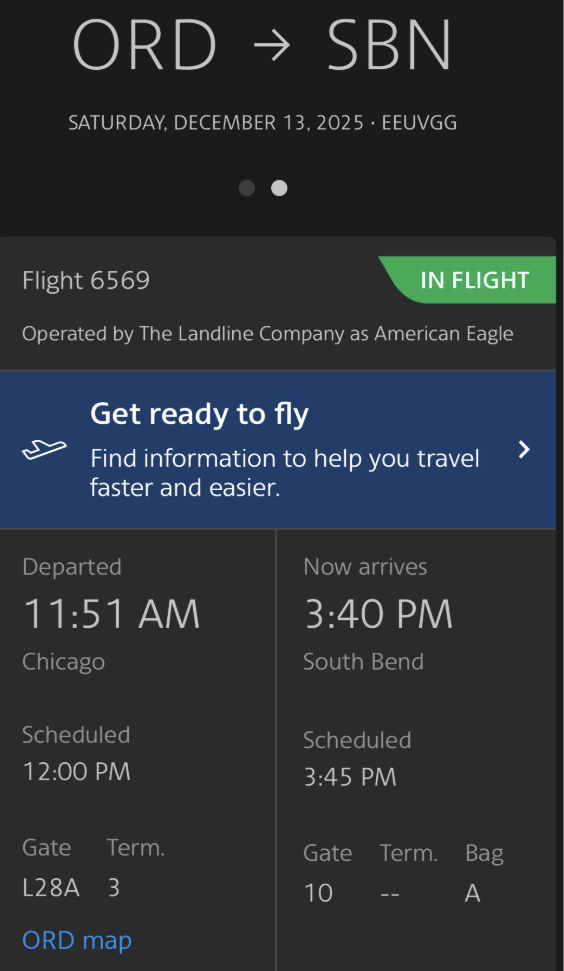
Terminal L. Gate 28A.
The sign states my flight has been pushed back an hour.
Sigh.
Oh, but wait. What do I see on the board? Another flight to South Bend, an hour earlier than mine. Perfect. We landed a little early anyway.
I huff it through the terminal, shins burning, slightly out of breath, mentally comparing the old Swiss Valley terminal to the new one now under construction. Are they going to put in moving walkways? That would be so nice.
By the time I reach the gate, I feel like I’ve run a marathon.
Well, maybe not quite.
But my shins are really on fire.
At the gate, I look up at the screen. My itinerary is there. No delay. No earlier flight.
The gate agent confirms it.
“This is the only flight to South Bend today. The bus is here, so we don’t anticipate any changes.”
Oh. Okay. Great.
The Aerobus is here.
Those small economy jets. Not luxurious, but perfect for short, quick trips. Especially on a budget.
Sometimes things don’t quite turn out the way you think they’re going to.
When Reality Changes the Plan
Boarding starts right on time.
“Zone 6, you may board.”
As I step through the door… something feels off.
Instead of the familiar gangplank connecting the terminal to the plane, there’s a flight of stairs. Construction, I assume. It’s been a while since I’ve flown the SBN–ORD route. We usually just drive it.
Then I see it.
Sitting at the bottom of the stairs is not a plane.
It’s a bus.
Not an Aerobus.
A real bus.
An over-the-road tour bus.
The lights in my brain turn on. I climb aboard. The driver offers me a biscotti.
“No thanks.”
I take a seat about four rows back, and suddenly it all makes sense.
The flight time wasn’t padded.
It wasn’t delayed.
It wasn’t a flight at all.
It was a bus trip.
The Body Reacts Before the Brain Catches Up
I feel it immediately. Tight chest. Shallow breath. Irritation rising fast.
I call my mom first. My parents are picking me up from the airport and my husband will have dinner ready when we arrive.
“I can’t find that flight number,” she says.
“That’s because it’s not a flight,” I reply. “It’s a bus.”
Then my dad chimes in, ever practical.
“Well,” he says, “at least you’ll be able to stay connected on your phone the whole time.”
Fair point.
Next, I call my husband. He’s been trying to figure out why the arrival time doesn’t match the usual 45-minute flight.
“Well,” I tell him, “I’m arriving at 3:45 because I’m on a bus.”
The eruption of laughter on the other end is borderline infuriating.
And then… something happens.
I choose to laugh too.
And just like that, my shoulders drop.
That moment matters more than it looks.
When plans change unexpectedly, the body often enters a stress response before logic has time to weigh in. Heart rate increases. Muscles tense. Stress hormones flood in to help, even when no real danger exists.
If we stay there, that response doesn’t just affect the moment. It spills into the rest of the day.
Choice Is a Health Skill, Not a Personality Trait
Still frustrated, but now together, we begin changing the narrative.
“Maybe this will actually be kind of nice someday,” someone says.
“Flights could be cheaper.”
“No driving.”
“Chauffeured instead.”
Nothing about the situation changed.
Only our interpretation did. Suddenly, new possibilities appeared.
This is where health quietly enters the conversation.
Choosing to reframe isn’t about pretending things don’t bother you. It’s about recognizing that how you respond directly affects your nervous system, your energy, and your ability to stay present.
Would you rather hold onto the frustration…
or shift toward curiosity, humor, or neutrality?
That choice, made repeatedly, shapes more than mood. It shapes resilience.
Why This Matters More Than We Think
Chronic stress keeps the body in a constant state of readiness. Over time, that prolonged activation can affect sleep, digestion, focus, emotional regulation, and overall well-being.
Moments like this one are small. But they’re frequent.
And every time we pause, notice, and choose differently, we teach our nervous system that change doesn’t automatically equal danger.
This matters deeply in seasons of care partnership.
When we are walking alongside someone we love.
When responsibility is shared, emotions are layered, and outcomes are uncertain.
In care partnering, there are constant plan changes. Appointments shift. Expectations adjust. Days rarely unfold exactly as imagined.
Plans will change.
Screens will be wrong.
Life will put you on a bus when you thought you were flying.
You may not get to choose the outcome.
But you almost always get to choose the tone of your response.
Sometimes the difference isn’t the destination at all.
It’s whether you arrive depleted… or still open.
And openness, I’m learning, is its own kind of arrival.
Want to Go Deeper?
This reflection is part of an ongoing conversation about stress, regulation, and what it means to move through life’s unexpected transitions as care partners, not in isolation and not at the expense of ourselves.
If this resonated with you, you may also enjoy:
The Moment Care Partnering Goes Sideways
A reflection on what happens when caregiving shifts unexpectedly, emotions rise quickly, and families find themselves navigating uncertainty in real time.
or
The Phone Call That Taught Me Why Emotional Intelligence Matters More Than Experience
An honest look at how nervous system regulation, emotional awareness, and the way we respond under stress often shape outcomes more than knowledge alone.
And if you’d like these reflections delivered directly to your inbox, I invite you to join our monthly Save Our Sanity Society newsletter. It’s where we slow things down, connect the dots, and explore what it really means to support others while staying grounded, present, and well ourselves.
We’d love to have you.
Your partner in care,
Shelley