

How to Respond to Accusations Without Damaging Trust
When Accusations Start
One of the hardest moments for families is when a loved one with dementia says someone has stolen their belongings.
Joanna struggled with this often. She would accuse other residents or staff of taking her things.
One day, it was her undergarments.
We searched for days.
Her distress grew.
And the accusations started to feel more personal.
“It’s that girl… she’s the one taking them. She likes them big.”
What Most People Instinctively Do
In moments like this, the instinct is to correct them.
To reassure.
To explain.
To prove.
“No one took it.”
“We already looked.”
“That’s not what happened.”
However, here’s the part most families aren’t prepared for:
What you do before the item is found matters more than finding it.
Because in that moment, it’s not about the missing item.
It’s about how safe and supported they feel.
Why Logic Doesn’t Work Here
In these moments, this is her reality.
And when someone feels something is true, logic will not undo that feeling.
Arguing doesn’t calm the situation.
It often escalates it.
Correcting doesn’t build trust.
It can quietly damage it.
What to Do Instead (A Simple 4-Step Approach)
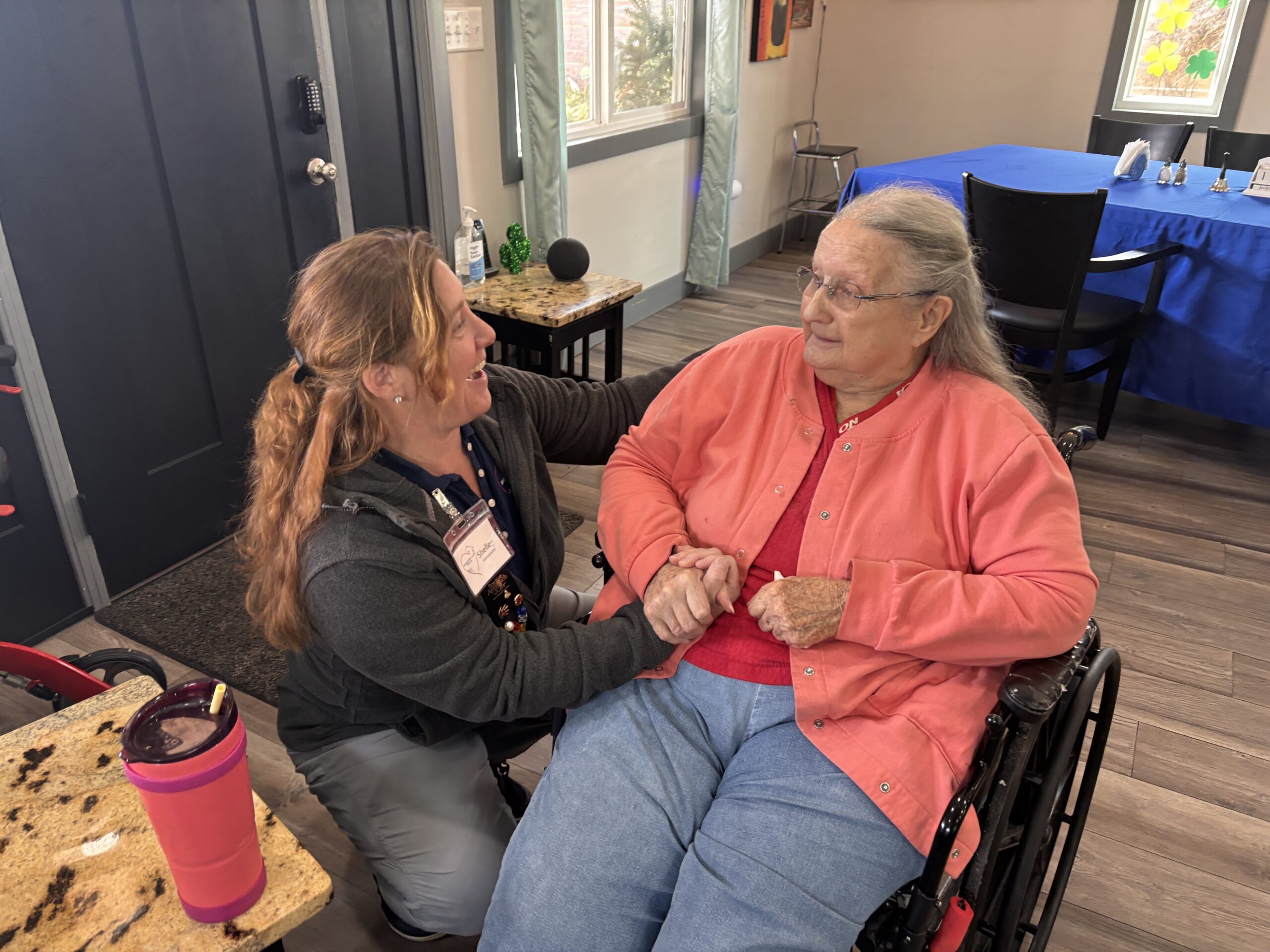
Instead, when accusations happen, shift from correcting to connecting.
1. Acknowledge the concern: “I hear that you’re upset your things are missing.”
2. Empathize with the feeling: “That would be very frustrating. I can see why you’re upset.”
3. Agree with the emotion, not the accusation: “If that happened to me, I’d feel the same way.”
4. Partner toward a solution: “I’m going to help you look into this and see what we can do.”
What This Actually Does
In doing so, this approach tells them:
- You hear them
- Their feelings matter
- They are not alone
And that changes everything.
Because when someone feels supported, the intensity of the moment often softens.
Quick Reset You Can Use in the Moment
Instead of…
- Saying “No one took it”
- Arguing or trying to prove them wrong
- Getting frustrated or defensive
Try this…
- Acknowledge their concern
- Name the feeling you see
- Let them know you will help
Why this works:
Feeling heard reduces distress. When you partner instead of correct, trust stays intact—and emotions settle faster.
The Bigger Picture Most Families Miss
In reality, moments like this aren’t rare.
They’re part of how dementia changes perception, memory, and processing.
And without the right tools, these situations can feel confusing, frustrating, and personal.
But they’re not personal.
They’re neurological.
And when you understand that, your response changes.
Grab & Go Starter Kit
If you find yourself in moments like this—where you’re trying to respond the right way but feel unsure in real time—you’re not alone.
We created a Grab & Go Starter Kit to help families feel more prepared in the moments that tend to catch them off guard.
It’s a simple, practical set of tools you can reference quickly when things feel confusing, emotional, or overwhelming.
Download the Grab & Go Starter Kit
Save Our Sanity Society Newsletter
If you want more real-life strategies like this—ones that actually work in the moment—I share them regularly through my newsletter.
It’s a space focused on:
- practical tools
- real scenarios
- and support that goes beyond surface-level advice
One Last Thought
You don’t need to win the argument.
You need to protect the relationship.
And often, that starts by choosing connection over correction.
If this has ever happened to you or someone you care for, I’d love to hear your experience. Leave a comment below—your insight might help another family feel less alone in this.
Your partner in care,
Shelley