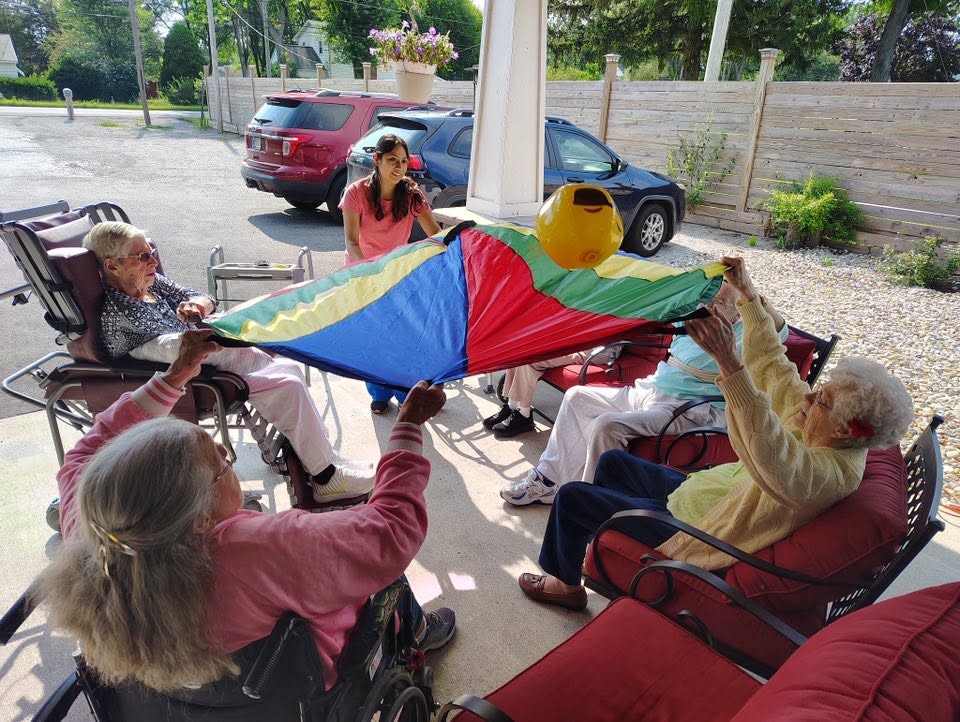

There is something happening right in front of us every single day, yet most people don’t recognize it until they’re living in the middle of it. We see Mom repeat the same question six times, we laugh when Dad forgets where he left his glasses again, and we notice the little changes, shrug our shoulders, and tell ourselves we’ll deal with it later because life is busy. The problem is that dementia doesn’t wait until you have more time. Understanding dementia behaviors means learning to recognize what those behaviors are trying to communicate, rather than trying to control them.
Ignoring dementia doesn’t make it less real. It doesn’t slow the disease down or make tomorrow any easier than today. What it does is rob you of the opportunity to build the very skills that would make the journey less frightening for everyone involved.
I know that because I did the exact same thing.
I Did the Same Thing
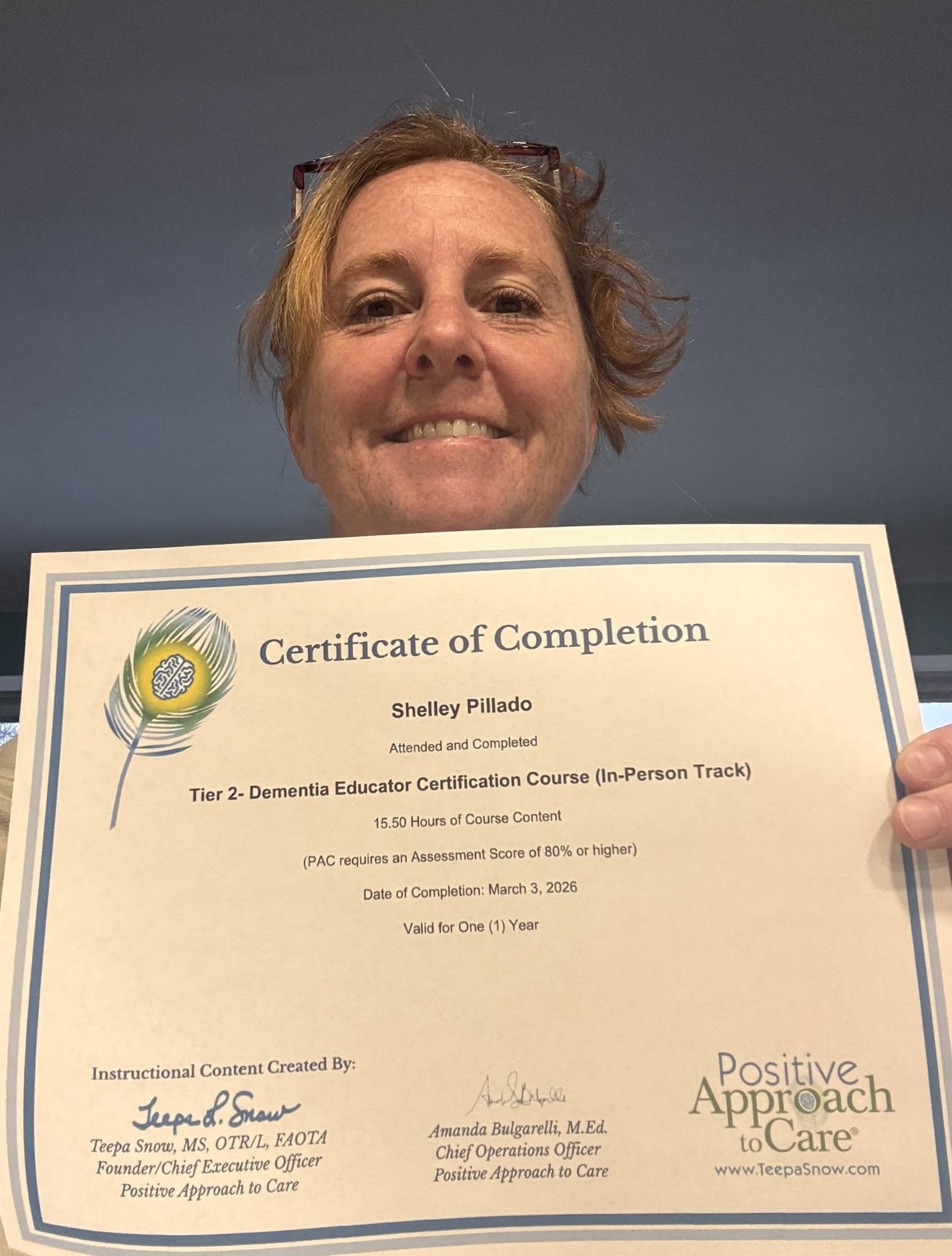
For years, I kept telling myself I didn’t need formal Positive Approach to Care training. I had watched Teepa Snow’s videos, I understood the concepts, and I had spent decades as an occupational therapist working with people whose lives had changed overnight because of illness or injury.
As an occupational therapist, I was learning every single day.
So I told myself,
“I’m already learning enough.”
“I’ve watched the videos.”
“I understand the concepts.”
If I’m being completely honest, there was probably another reason hiding underneath those excuses. I wasn’t sure I could do it as well as I expected myself to. Part of me wondered, “What if I discover I don’t know as much as I thought?”
It’s funny how often we disguise fear as “being too busy.” Sometimes we delay the things that have the greatest potential to change us. Not because we don’t value them, but because growth can be uncomfortable.
That wasn’t easy to admit. Still, I’m so glad I finally said yes and took the training.
Here’s the Part That Made Me Stop in My Tracks
During the training, I found myself thinking about children. I’ve always been good with little kids. Hand me a frustrated two-year-old who’s crying because they can’t tell you what they need, and I’m completely comfortable. I don’t get offended, I don’t argue, and I certainly don’t expect them to think like an adult. Instead, I get curious. What are they trying to tell me? What am I missing?
And then I had a realization that took me somewhere I wasn’t expecting. What surprised me wasn’t that I learned a handful of new techniques, it was that I started seeing people differently. The training wasn’t only about dementia and understanding dementia behaviors. It was about understanding what another human being is experiencing when their brain doesn’t process the world the way yours does.
One afternoon, I was babysitting my twin two-year-old grandchildren when something clicked. I realized I was using the exact same skills I use with people living with dementia, yet for years I’d convinced myself those were completely different worlds. Then two completely unrelated trainings collided in my head.
One was Teepa Snow’s Positive Approach to Care and the other was learning about how young children develop. Finland, whose education system is admired around the world, doesn’t begin formal classroom instruction until around age seven. They emphasize play, exploration, observation, and learning by doing. This is how many people living with dementia continue to learn too. They don’t learn because we explained it one more time, they learn because they experienced it, felt safe, watched us, and did it alongside us.
The difference isn’t the approach. The difference is our expectations. We expect children to struggle because they’re learning. We expect adults to think like they always have, so when dementia changes that, we keep asking them to do something their brain simply can’t do anymore. That’s where frustration begins, not because they’re difficult, but because we’re asking the impossible.
Understanding Dementia Behaviors Starts Here
Understanding dementia behaviors begins by realizing that behavior is communication—not by memorizing the right words.
Why do we naturally respond this way with children, but hesitate when someone is living with dementia? I don’t think it’s because we’re less compassionate. I think it’s because our expectations are different. With children, we expect growth, learning, and mistakes. We understand their brains are still developing. With dementia, we expect loss and decline.
Without even realizing it, we stop asking, “What are they trying to communicate?”
And start thinking, “How do I stop this behavior?”
That single shift changes how we show up.
Why Dementia Behaviors are Communication
One of the greatest lessons reinforced during my training wasn’t a technique. It was a perspective: Behavior is communication. Always.
A toddler throwing a toy is communicating something, a resident refusing a shower is communicating something
The father who insists he needs to “go home” is communicating something.
The mother refusing to shower is communicating something.
Until we stop looking at the behavior and start asking what they’re trying to communicate, we’ll keep solving the wrong problem.
When we stop trying to fix the behavior and start trying to understand it, everything changes. Not overnight, but conversation by conversation. Moment by moment.
Maybe, just maybe…dementia can make us better human beings if we’re willing to let it.
It forces us to slow down, teaches patience in a world that rewards speed, and replaces the need to be right with the desire to understand. Those aren’t dementia skills, they are life skills that make us better spouses, parents, leaders, coworkers, and friends.
What I Had Been Missing All Along
One of the biggest surprises from this experience was realizing I didn’t need an entirely new set of skills. I already had many of them.
Patience. Observation. Curiosity. Flexibility. The ability to listen beyond words.
Dementia wasn’t asking me to become someone completely different. It was asking me to strengthen skills I already possessed.
Learning more wasn’t what I needed. Seeing differently was. I’ve started wondering if we’ve had it backward all along.
I Didn’t Just Become Better At Dementia
In the end, I became better at people. That may have been the greatest gift of all.
The lessons I learned didn’t stay inside memory care communities. They changed how I communicate with families, how I listen, how I respond when someone is overwhelmed, and how I pause before making assumptions.
Because whether someone is living with dementia, raising young children, navigating grief, or simply having a difficult day, behavior usually has a story behind it.
When we become curious instead of corrective, we begin seeing people differently. And when we see people differently, we love them differently too.
So here’s the question I’ve been asking myself lately: What if the thing you’ve been avoiding isn’t just another difficult chapter of life? What if it’s the very experience that has the power to change how you see people… and maybe even change who you become?
What Are You Noticing Right Now?
Sometimes the first step is simply knowing what to look for.
The Care Readiness Checklist helps you take a closer look at your loved one’s daily needs, safety, health, emotional well-being, and support. It can help you recognize where things are working well, where additional support may be needed, and what deserves a conversation now — before a crisis forces the decision for you.
Get the Free Care Readiness Checklist
You Don’t Have to Figure Out What Comes Next Alone
Every care partner journey looks different. You may be just starting to ask questions, or you may already be navigating changes you never expected.
The Care Partner Membership was created to meet you where you are with education, practical resources, ongoing support, and a community that understands the journey.
With four membership levels to choose from, including a free option, you can choose the level of support that makes sense for you right now and grow into more support when you need it.
Explore the Care Partner Membership
What If…
What if the thing you’ve been avoiding is actually the thing that could help you grow the most?
Maybe dementia isn’t simply something to survive. Maybe it’s one of the greatest opportunities most of us will ever have to learn how to truly connect with another human being. Not through logic or persuasion, but through empathy, observation, flexibility, and grace.
Maybe dementia isn’t only teaching us about memory, but also about patience?
Compassion. Humility. Curiosity. Connection.
Perhaps the skills you’ve been searching for have been there all along waiting for someone, or something, to help you see them.
Your partner in care,
Shelley