

Should you save it for later or use it to give him better care now?
A daughter recently found herself facing a decision no family ever feels fully prepared to make. Her father needed more care than traditional assisted living could safely provide. But he still had enough money to pay privately for approximately two more years. Paying for long-term care with savings raises a difficult question. Should families use those resources for better care today? Or save them for tomorrow?
The family toured HolistiCare. They loved the home, the small setting, and the possibility that her dad could receive something very close to one-on-one care. They could also picture themselves visiting more often because we were closer to both daughters.
Then they looked more closely at the numbers. The cost was more than they had expected, and fear about what would happen when his money ran out took over.
They chose a large long-term care facility instead. The hope was that Dad might improve enough to return to assisted living. If he didn’t, at least he’d already be somewhere that could care for him when his private-pay funds ran out.
The Financial Plan Looked Responsible on Paper
It made sense on paper. The money might be protected for a bit longer, and it appeared to protect his future. But almost immediately, his daughters began seeing the cost of that decision in ways that did not show up on a financial worksheet.
The care was not as attentive as they had hoped. Communication was poor. They were already chasing answers and worrying about what was happening when they were not there. After his care conference, the writing on the wall became harder to ignore. Returning to traditional assisted living probably was not realistic.
One daughter began reaching out to me, not simply for information, but because she needed someone who understood how heavy all of this had become. That is when the real question changed.
It was no longer just, “How do we make Dad’s money last as long as possible?“
It became, “What are we asking Dad to live with while we preserve that money for later?”
Saving Money Shouldn’t Mean Sacrificing Quality Care
There is no prize for making someone’s money last longer if the tradeoff is two years of inadequate attention, poor communication, and family members lying awake wondering whether he is being properly cared for.
A long-term care facility may eventually become the right answer. It may even be the only financially sustainable option once private-pay resources run low. But that doesn’t automatically make it the best choice today.
If Dad has the resources to receive exceptional care now, using those resources for his care is not irresponsible. That is what the money is for.
The responsible part is building the future transition into the plan before the family is backed into another crisis, and that’s the piece I wish more families understood.
You can plan responsibly for tomorrow without automatically accepting less for your parent today.
Paying for Long-Term Care With Savings: Planning Ahead Doesn’t Mean Settling Today
A sound plan does not wait until the account is nearly empty.
Families can decide ahead of time how much money to set aside for a future move, legal guidance, and other transition costs. Then they can set a clear financial checkpoint and begin exploring the next placement well before it becomes an emergency.
They can also meet with a qualified elder-law attorney or benefits professional early, while there is still time to understand the rules, gather records, and make thoughtful decisions.
That planning can happen while Dad receives excellent care. It does not require sacrificing his present quality of life to prepare for his future needs.
When paying for long-term care with savings, families need to consider more than how many months or years the money will last. They also need to consider what those months and years will actually look like. The choice is not between spending every dollar now and ignoring the future, or protecting every dollar and accepting poor care.
There is a middle path: give him the best care his resources can reasonably provide now, establish a realistic transition plan with qualified guidance, and review that plan before the money reaches a critical point.
Not Sure What Kind of Care Your Parent Really Needs?
Choosing the right care setting involves more than comparing monthly rates.
Our FREE Making the Right Move Guide helps families understand their options, recognize important questions, and approach care decisions with greater confidence.
Get the Making the Right Move Guide
Care Needs Do Not Always Move in One Direction
Families are often told to prepare for increasing care needs, and they should. But increasing support is not the only possible outcome.
As an occupational therapist, I have seen what can happen when someone is given more opportunities to move, time to participate in daily activities, and consistent encouragement to use the abilities that remain.
A person who is rushed, left in a chair, or routinely has things done for him may have fewer opportunities to maintain his abilities.
A person who is known, encouraged, and patiently supported may maintain function or, in some circumstances, regain strength and independence.
Improvement is never something I promise. But I also refuse to assume that every person can only decline.
At HolistiCare, movement through our levels of care is not one-directional. If someone’s needs decrease, the level of care and the rate are adjusted downward accordingly. That matters.
Dad may never return to traditional assisted living, but greater attention and more opportunities to use what he still has could help him maintain or improve his abilities. Even when his diagnosis does not change, his daily experience can.
The Question I Would Ask My Own Family
If this were my father, I would not ask only how long the money could last. I would ask what those remaining years could look like. Paying for long-term care with savings is about more than managing the money. It’s about making sure those resources are used in a way that truly supports Dad’s quality of life.
Could he live in a home where the care partners know his routines, notice small changes, and understand what helps him feel safe?
Could his daughters visit as daughters instead of arriving as investigators, supply managers, and crisis responders?
Could the family receive an answer before they have to make three phone calls and leave two messages?
And if the answer is yes for the next two years, I would not dismiss those two years as merely the time before the money runs out.
They are part of his life. And they count.
Planning for Future Long-Term Care Costs Without Sacrificing Today
Paying for long-term care with savings requires balancing your parent’s quality of life today with a realistic plan for the future. If your family is choosing between the care your parent needs today and the care you fear they may need later, do not make the decision from the monthly rate alone.
Put the quality of care, the family’s workload, the financial runway, and the future transition plan on the same page. If the setting you chose already feels wrong, you do not have to spend months gathering more proof. You can reassess the situation and explore other options.
Choosing differently now does not mean the first decision was foolish. It means you learned more, his needs became clearer, and you are responding to the information in front of you. Because the goal isn’t simply to make Dad’s money last. It’s to make the time he has matter.
What Could More Personal Care Look Like for Your Parent?
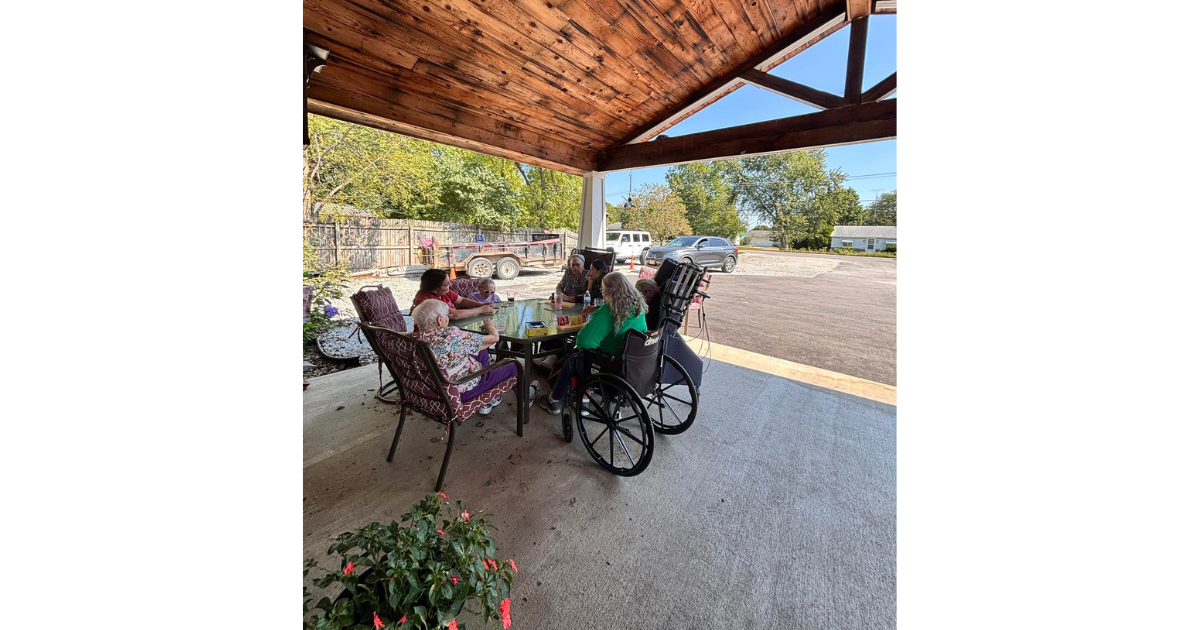
At HolistiCare Homes in Elkhart, Indiana, our small, seven-resident setting allows us to focus on personalized attention, meaningful daily routines, and close communication with families.
We believe that knowing someone’s habits, preferences, and remaining abilities makes a difference in how care is delivered. And we understand that choosing care isn’t just an emotional decision. It’s a financial one, too.
If you want to know what highly personal care could look like for your parent, fill out the HolistiCare Homes contact form.
Let us know what care questions and financial concerns you have, and maybe even the thoughts you’re afraid to say out loud.
We’ll talk honestly about the level of support your parent needs now, what improvement may be possible, and how your family can plan for the next transition without sacrificing the care your parent deserves today.
Complete the Contact Form Here
Or call 574-607-8120 to start a conversation.
Every family’s financial and care situation is different. For questions involving Medicaid eligibility, asset planning, or long-term care benefits, consult a qualified elder-law attorney or benefits professional before making financial decisions.
A Final Thought From Shelley
Families often feel pressure to make the one perfect decision that will protect their parent from every possible problem down the road. But no one can predict exactly how care needs, finances, or circumstances will change.
What we can do is make thoughtful decisions with the information we have today, plan for what may come tomorrow, and remember the person at the center of it all.
Dad isn’t waiting for his life to begin after the financial plan works out. He’s living it right now.
Caring for Mom or Dad Comes With Hard Decisions. You Don’t Have to Face Them Alone.
When you’re making decisions about an aging parent’s care, it’s easy to get caught between what’s best for them today and what might happen tomorrow.
The financial worries are real. So is the pressure to make the right choice. And sometimes, all you need is a little perspective from someone who’s walked alongside families facing those same decisions.
That’s why I created the Save Our Sanity Society, my FREE monthly newsletter filled with real stories, practical guidance, and lessons learned from nearly three decades of working with older adults and their families.
Because caring for someone you love comes with enough uncertainty. You shouldn’t have to figure everything out alone.
Want it delivered to your inbox?
GET THE FREE DIGITAL NEWSLETTER
Prefer a printed copy you can read, save, or share?
SEND ME THE FREE PRINTED NEWSLETTER
Both versions are free. Just choose the one that works best for you.
Your partner in care,
Shelley